

Nintendo Case Study — The Switch Revolution: From Bankruptcy Risk to 141 Million Units
Have you ever heard of Mario? The little plumber who jumps on mushrooms and rescues a princess? Of course you have. Mario belongs to Nintendo — a Japanese gaming company that has been entertaining the world since 1889, when it started as a playing card manufacturer. And this case study is about how that company, despite owning some of the most beloved characters in history, nearly went bankrupt — and then made one of the most stunning comebacks in modern business history.
Between 2013 and 2016, Nintendo reported three consecutive years of operating losses for the first time in its history. Its Wii U console had sold just 13.56 million units in its entire lifetime — compared to 101 million for the original Wii. Analysts openly discussed whether Nintendo should exit the hardware business entirely and become a software-only company, licensing Mario and Zelda to Sony's PlayStation or Microsoft's Xbox.
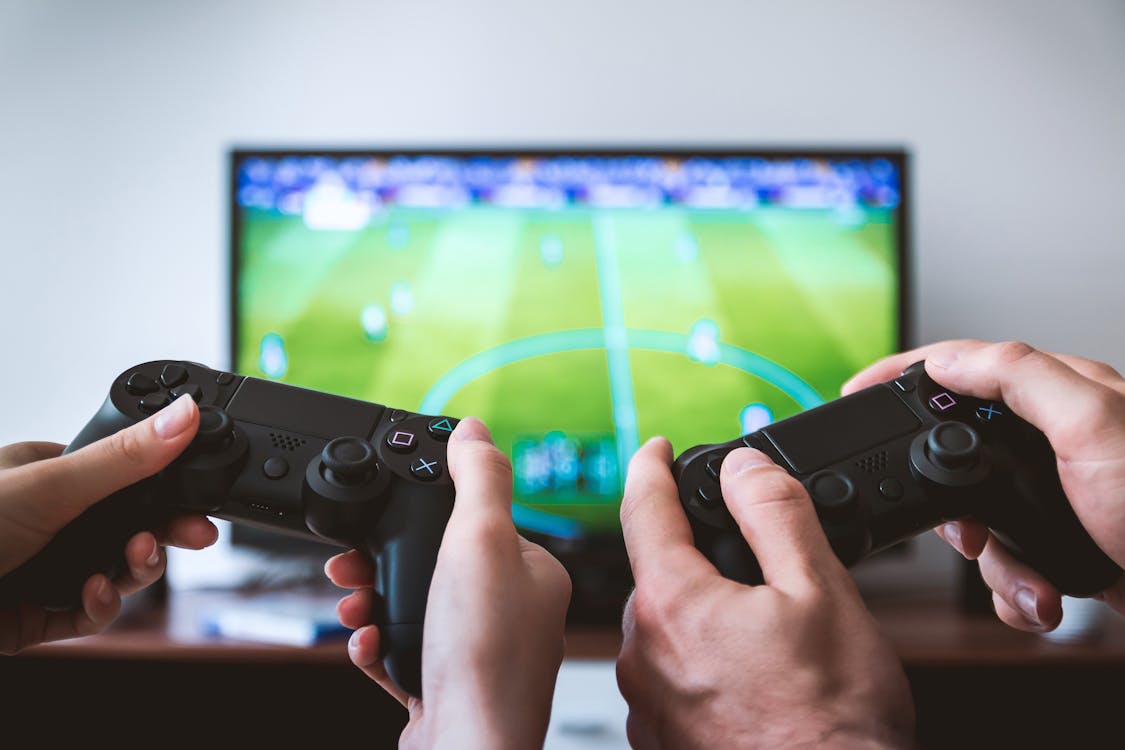
Nintendo chose differently. On March 3, 2017, they launched the Nintendo Switch — a hybrid gaming console that could be played on a television at home or taken anywhere as a portable handheld device. Within five years, the Switch had sold 141 million units, become the best-selling gaming console of its generation, generated the highest-grossing animated film of 2023 with the Super Mario Movie ($1.36 billion), and established Nintendo as an irreplaceable force in global entertainment.
This is the story of how Nintendo did it — explained in plain language, with the big strategic ideas that powered every decision.
The Wii U Disaster — What Went Wrong (2012–2016)
What Was the Wii U?
The Wii U was a home gaming console launched in November 2012. It came with a special tablet-like controller — a screen with buttons that you could hold in your hands while the game ran on your TV. Nintendo thought this was clever. Most consumers were confused.
The biggest problem? Most people thought the Wii U was just an add-on controller for the original Wii — not a brand-new console. Imagine launching a brand-new iPhone but nobody realises it is a new phone — they think it is just a new cover for the old one. That is how badly Nintendo communicated the Wii U to the world.
The Five Real Reasons the Wii U Failed
Reason 1 — Confusing Marketing: Nintendo never clearly explained what the Wii U was. The name "Wii U" sounded like an upgrade to the Wii, not a completely new product. Parents shopping for holiday gifts were baffled. Many stores could not explain it either.
Reason 2 — No Great Games at Launch: A gaming console is useless without great games. The Wii U launched with almost no must-have titles. The best games came out years later — by which time consumers had moved on.
Reason 3 — Third-Party Studios Walked Away: EA (FIFA), Ubisoft, and Activision (Call of Duty) refused to make Wii U games. The console was technically weaker than PlayStation 4 and Xbox One, and the small user base meant less revenue. Fewer games meant fewer buyers — a vicious cycle.
Reason 4 — Mobile Gaming Arrived: In 2012–2013, Candy Crush and Subway Surfers took the world by storm. Free games on smartphones were eating into Nintendo's handheld gaming business. Why buy a separate gaming device when your phone already plays games?
Reason 5 — No Clear Identity: PlayStation was for serious hardcore gamers. Xbox was for online multiplayer fans. The Wii U was neither — too weak for hardcore gamers, too expensive for casual players. It had no tribe of loyal customers.
| Year | Wii U Sales | Nintendo Profit/Loss | What Was Happening |
|---|---|---|---|
| 2012 | 3.06 Million | +¥43 Billion | Launch year — early excitement |
| 2013 | 2.72 Million | −¥36 Billion | First operating loss in 30 years |
| 2014 | 3.38 Million | −¥46 Billion | Barely any new games released |
| 2015 | 2.72 Million | −¥16 Billion | Switch project quietly begins |
| 2016 | 0.76 Million | +¥29 Billion | Last year of Wii U — Switch coming |
| TOTAL | 13.56M (lifetime) | 3 consecutive losses | Worst era since 1981 |
For comparison: the original Nintendo Wii sold 101 million units. The Wii U managed just 13.56 million in its entire lifetime.
The Big Strategic Ideas — How Nintendo Turned It Around
Big Idea 1 — Blue Ocean Strategy: Compete Where No One Else Competes
Most gaming companies compete in a "Red Ocean" — Sony PS5 versus Xbox, both fighting over the same hardcore gamer audience. Nintendo looked at that competition and walked away from it entirely.
The Nintendo Switch is the only console on earth that is simultaneously a home TV gaming system AND a portable handheld device. No Sony. No Microsoft. No competitor at all. That is called a Blue Ocean — an uncontested market space where you have no direct competition.
Nintendo used Blue Ocean Strategy twice in recent history:
- Wii (2006): Targeted grandparents and families who had never played games before, using motion controls. Sold 101 million units.
- Switch (2017): Created the hybrid console that plays on TV AND in your hands. Sold 141 million units.
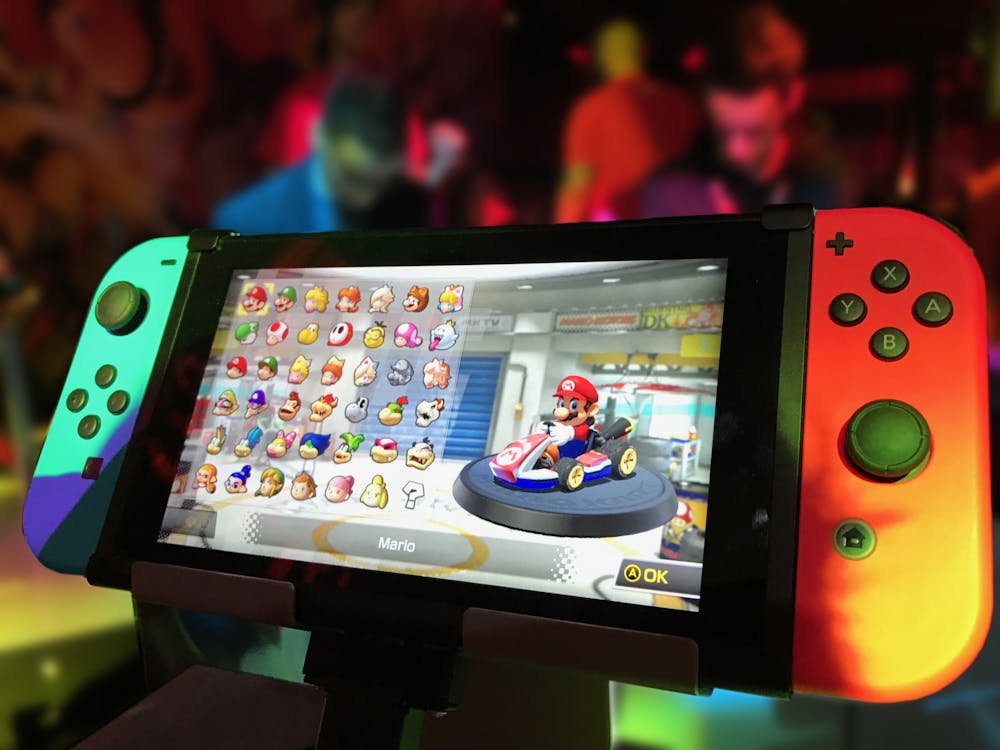
Big Idea 2 — Hybrid Product Design
The Switch is not an invention of something completely new — it is the combination of two things that existed separately for 30 years. Nintendo had two separate product lines for three decades:
- Home consoles (Nintendo 64, Wii, Wii U) — plugged into your TV
- Handheld devices (Game Boy, DS, 3DS) — carried anywhere
The Switch merged both into one device. The same game you start on your TV at home, you pick up and continue on the bus. One device. Two audiences. Twice the potential market.
Big Idea 3 — IP Monetisation Beyond the Core Product
"IP" stands for Intellectual Property — characters and stories you own. Nintendo's IP is among the most valuable on earth: Mario, Zelda, Pikachu (Pokémon), Donkey Kong, Kirby, Metroid, and dozens more.
For years, Nintendo sold IP only through their own games. Then they opened it up:
| New Revenue Stream | Details | Result |
|---|---|---|
| Super Mario Movie (2023) | Animated film with Universal Pictures | $1.36 billion box office |
| Super Nintendo World | Theme park at Universal Studios Japan, Hollywood | Millions of visitors annually |
| LEGO Mario sets | Licensed toy collections | Major global seller |
| Pokémon GO (Niantic) | Mobile game license | $7B lifetime revenue |
| Nintendo merchandise | Clothing, toys, accessories | Growing direct revenue |
Each new touchpoint — a Mario movie, a Mario LEGO set, a Super Nintendo World theme park — introduces the characters to a new audience, who then go and buy Nintendo games and consoles. It is a virtuous cycle: every new product sells every other product.
Big Idea 4 — Innovation From Constraint
Nintendo could never match Sony or Microsoft's hardware budgets. So they were forced to think differently.
The Switch uses the Nvidia Tegra X1 chip — a mobile processor originally designed for tablets. When the Switch launched in 2017, this chip was already two generations behind what Sony and Microsoft were using. By raw computing power, the Switch was about 8 times less powerful than the PlayStation 4.
Why choose weaker hardware? Because mobile chips use far less battery power (essential for a portable device) and cost less to manufacture (allowing a lower retail price). The technical constraint forced Nintendo to design games that are fun regardless of graphical power.
Result: Zelda: Breath of the Wild — running on hardware weaker than its competitors — won Game of the Year. Limitation became liberation.
The Tech Stack — Every Tool Nintendo Used
The Hardware
| Switch Component | What It Is | Why Nintendo Chose It |
|---|---|---|
| Nvidia Tegra X1 Chip | The brain of the console (mobile processor) | Low power consumption; runs 4–9 hours on battery |
| Detachable Joy-Con Controllers | Small controllers that clip onto the screen | Play alone or instantly with a friend anywhere |
| Kickstand | Small plastic stand on the back | Table mode — play without holding the screen |
| Dock | TV connection base | Transforms handheld into home console in seconds |
The Switch has three distinct play modes:
- TV Mode: Docked, playing on the big screen
- Handheld Mode: Held like a tablet, playing anywhere
- Tabletop Mode: Propped on kickstand, sharing with a friend
The Software — Nintendo Switch Online
Nintendo Switch Online (NSO) is Nintendo's subscription service — ¥2,400 per year ($24) for access to a library of classic games from the NES, SNES, N64, and Sega Genesis eras. NSO had 36 million subscribers by 2023.
The subscription creates three benefits: recurring revenue that continues between major game launches; daily engagement from classic game libraries; and a platform for multiplayer gaming with friends.
The Game Portfolio — Quality Over Quantity
Nintendo's first-party game library is uniquely deep and consistently high-quality. The five largest Nintendo Switch titles:
| Game | Sales | Why It Matters |
|---|---|---|
| Mario Kart 8 Deluxe | 66+ million | The perfect party game — playable at any age |
| Animal Crossing: New Horizons | 44+ million | Launched during COVID; became a cultural moment |
| Super Smash Bros. Ultimate | 34+ million | Every Nintendo character ever in one game |
| The Legend of Zelda: BOTW | 31+ million | Won every major Game of the Year award |
| Pokémon Sword/Shield | 26+ million | The franchise's first mainline console game |

The Results — Numbers That Tell the Story
| Metric | Wii U Era (2014 worst) | Switch Era (2021 best) | Change |
|---|---|---|---|
| Operating Profit | −¥46B loss | +¥528B profit | Turnaround |
| Console Sales/Year | 2.72M units | 23M units | +746% |
| Net Profit | −¥23B | +¥477B | Complete reversal |
| Stock Price | ¥9,000 (2014 low) | ¥70,000 (2023 high) | +677% |
Key Takeaways — What Every Professional Can Learn
1. Compete where no one else competes. The Switch's Blue Ocean (hybrid gaming) had zero direct competition. That is worth more than any technological advantage in a crowded market.
2. Innovation often comes from combining existing things, not inventing new ones. The Switch is a home console + a handheld. Nothing new — just combined. The most accessible innovations often look simple in retrospect.
3. Your brand's characters are assets that can generate revenue far beyond your core product. Nintendo sat on Mario, Zelda, and Pokémon for decades before unlocking their full IP value. The $1.36 billion movie, the theme parks, the merchandise — these were always possible. It just took the courage to open the door.
4. Constraints force creativity. Nintendo's inability to match Sony's hardware budget forced game designers to create experiences that transcended graphical power. The Zelda team designed Breath of the Wild to be extraordinary on modest hardware.
5. The same values that built your audience can rebuild them after failure. Nintendo's most loyal customers never left — they were waiting. When the Switch arrived, pent-up love for Nintendo's characters and gameplay philosophy created launch momentum no marketing campaign could have manufactured.
Nintendo's story is one of the great business comebacks in modern history — a 130-year-old company that reimagined itself, found an uncontested market, and turned its most beloved characters into a global entertainment franchise worth hundreds of billions of yen. The music was not over. Nintendo just changed the song.